




.svg)

One verified record. Every buyer's format.
Every hyperscaler needs energy —
but Google, Microsoft, Amazon, Meta, and the AI neoclouds each ask for the data behind it differently. EarnDLT turns your project's energy and emissions data into a verified QET record you build once and map to every buyer, without rebuilding the evidence.
What a QET is, in one line: a machine-readable record of your energy's measured emissions attributes, independently verified in alignment with ISO 14064-3 and preserved with an auditable chain of custody.
Schedule 30 minutes with the EarnDLT team


Your Evidence Shouldn't Be Rebuilt for Every Buyer
Selling energy to a hyperscaler now means proving it — with more, and more verifiable, data than ever. And no two buyers ask for that proof the same way.
The production, emissions, and environmental-attribute data behind your project doesn't change from buyer to buyer. The way each one wants it structured, documented, and verified does. A single opportunity can bring its own combination of:
- Data fields and reporting periods
- Emissions and carbon-intensity methodologies
(annual vs. hourly) - Evidence and assurance expectations
- Verification levels
- File formats, APIs, and machine-readable schemas
Without a common, verified data layer underneath, you reassemble, re-prove and reconfigure the same evidence for every buyer you talk to.
When you're chasing a contract, that rework is time you're not closing the deal — and any gap a buyer's diligence finds is a reason to pick a producer whose evidence is already in order.
Once you're supplying, it doesn't stop: every new buyer you add and every change in what an existing one requires is another rebuild, unless the record was designed to be extended and reused.

The Same Energy,
Read Four Different Ways
Buyer
Public Energy Objective
Data that may need to travel with your project
Standards and
Instruments in Play
Google ¹
24/7 carbon-free energy by 2030
Generation timestamp, grid location, source, carbon-free status
Granular Certificates / T-EACs (EnergyTag)
Microsoft ²
100/100/0 — 100% zero-carbon energy, 100% of the time
100/100/0 — 100% zero-carbon energy, 100% of the time
Granular Certificates (EnergyTag; GC Trading Alliance)
Amazon / AWS ³
Renewable-energy matching across operations and AWS regions
Volume, region, generation source, supporting documentation
Annual RECs and Guarantees of Origin (GHG Protocol market-based)
Meta ⁴
Clean-energy matching and support for new projects
Generation, location, project provenance, new-capacity evidence
Annual RECs (GHG Protocol market-based)
Your project might be electricity, natural gas, RNG, or captured carbon.
The pattern is the same: one output, evaluated through different data.
Sources:
How QET Bridges the Gap
And the energy itself is getting more complex.
Hyperscalers and neoclouds no longer rely only on grid electricity and renewable contracts. With interconnection queues stretching years, behind-the-meter natural gas, on-site generation, storage, RNG, and carbon-management pathways are moving into the data-center energy stack — and how those emissions are accounted for still varies by buyer, project, and framework. Each pathway brings its own attributes, methodologies, and delivery evidence. That's what a QET is built to carry.
Build the evidence once. Map it to anyone.
A QET creates a verified, machine-readable record of what you produced, where and when, how the emissions were calculated, which attributes apply, how the data was independently verified, and how the energy relates to the consuming asset — down to hourly matching where it's needed. Because that record is verified and aligned with the frameworks buyers already report under, it maps into each buyer's fields, methodology, and format without rebuilding the underlying evidence.
One record, whatever you generate:
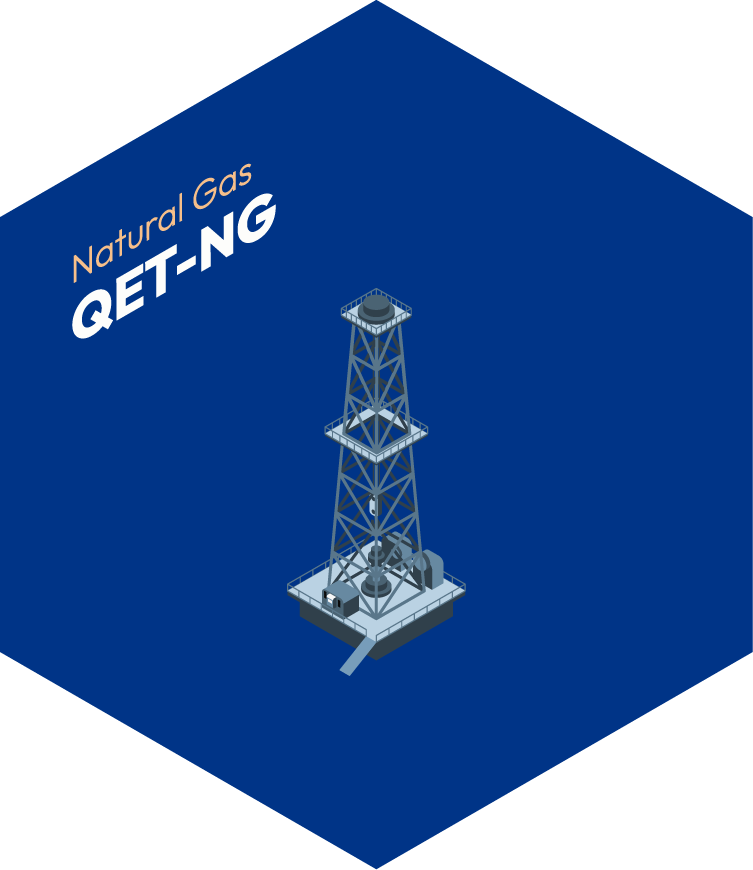
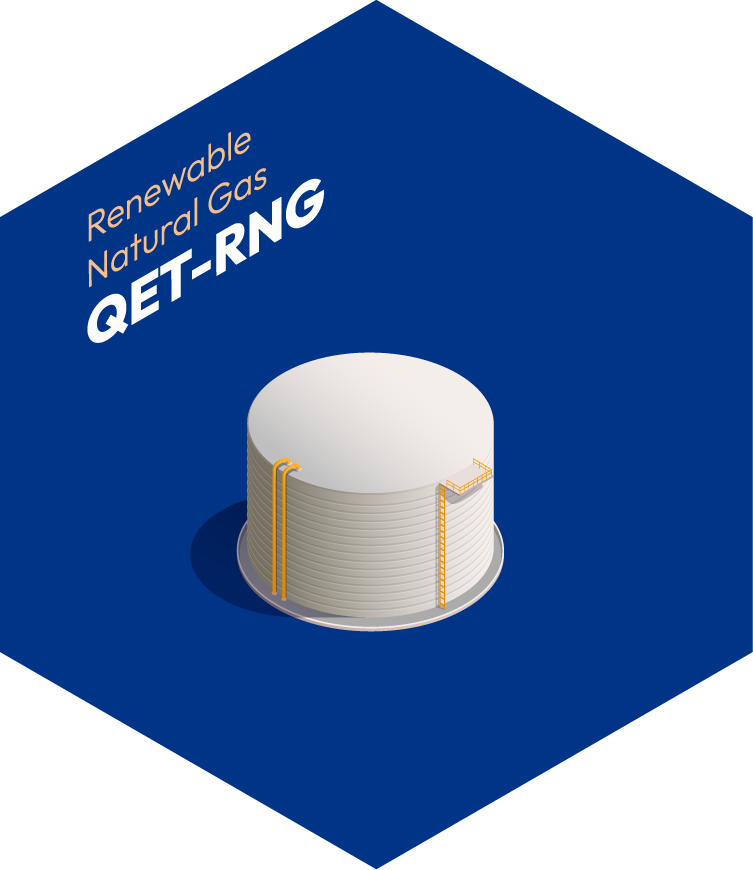
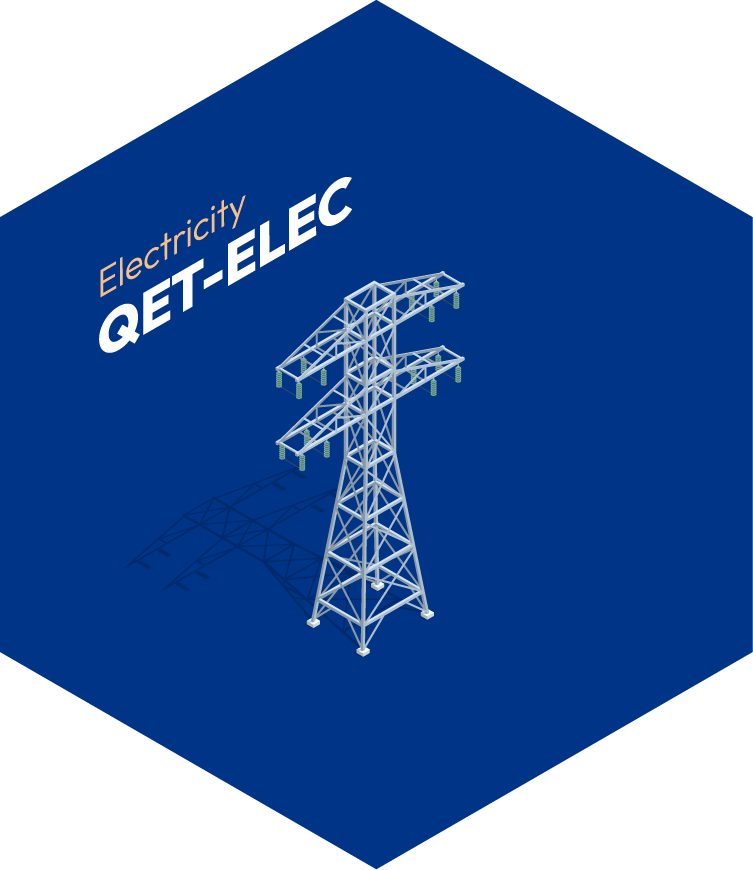
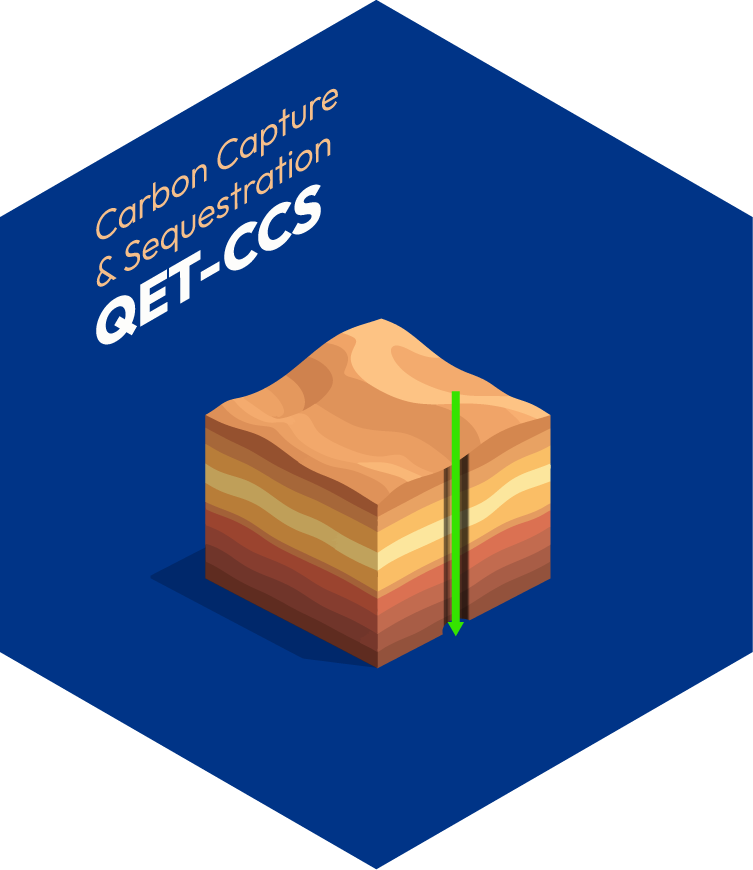
Every type runs on the same registry, the same retirement architecture, and the same methodology-versioned schema — each carrying the attributes its market needs. And a record can be extended with additional verified attributes or compliance layers — a California LCFS pathway, an EU Methane Regulation pack — as a buyer or market requires, without rebuilding the evidence underneath.
Verified Once.
Defensible Everywhere It Travels.
A QET isn't a claim you make —
it's a certificate independent verifiers stand behind.
- Independently verified in alignment with ISO 14064-3, under governance aligned to ISO 14065 and ISO/IEC 17029
- Structured to support reporting under the GHG Protocol, SBTi, CDP, and TCR, per the applicable QET methodology and use case
- Framework-aligned exports out of the same token — e.g., Scope 2 via QET-ELEC, Scope 1 and Scope 3 Category 3 via QET-RNG / QET-NG
- Independently verified in alignment with ISO 14064-3, under governance aligned to ISO 14065 and ISO/IEC 17029
That's the difference between sending a buyer your data
and sending them evidence they can file.
Know What Your Buyer Needs Before You Build, Bid, or Rebuild
Whether your project is operating, in development, or being pitched to a buyer, a producer consultation helps you get ahead of the data each buyer will ask for. It gives you:
- A review of the project data you have or plan to collect
- A gap assessment across formats, methodologies, and verification levels
- A QET pathway to a single, reusable, verified record in the right form for what you produce
- Clear next steps for verification and integration
That's the difference between sending a buyer your data and sending them evidence they can file.
Build the record once.
Prepare it for every opportunity.
See how a QET can turn your energy and emissions data into one verified record you can adapt for every hyperscaler and neocloud opportunity — without rebuilding the evidence each time.
Schedule 30 minutes with the EarnDLT team


